Home
Home About
About Reviews
 Recipes
 Books
Books Freebies
 Contact
 Search
What does 8,700 kilojoules look like?

8,700 is a magic number in nutrition. It’s the number of kilojoules (kJ) that is the “average” intake for adults in Australia, if the surveys are correct.
It’s widely used as a benchmark figure and as the basis of food labels such as the Percent Daily Intake values.
Recently kilojoules have appeared on fast food menu boards and they use 8,700 as the yardstick to assess their foods against. Here's my take on it.
 Obviously 8,700 kilojoules a day is an average. The actual number of kilojoules you need will vary depending on your age, gender, life stage (if you’re growing or are pregnant as this calls for more energy), weight, height and how physically active you are.
A very active 16-year old, for example, requires 12,000 kJ a day, which is 4,000 kJ more than a sedentary 70-year-old. And then there’s that wonderful thing known as genetic inheritance. Most of us know people who always ‘burn off their food quickly’ and rarely put on weight –they most likely come from a family with a similar metabolic tendency!
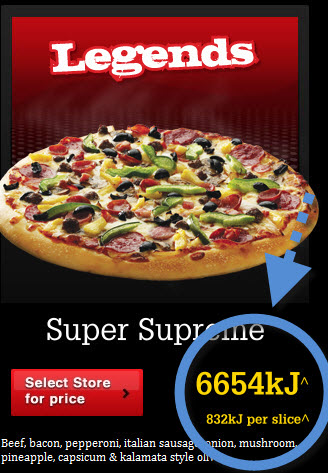
The Legends pizza ad shown has 6654 kJ in the whole pizza which becomes 832 kJ per wedge. Think if this is a realistic serve size - would you eat one-eighth of a regular pizza? Unlikely. You'd probably tuck into half of it (3327 kJ) or at least two wedges (1664 J).
8,700 kilojoules = 2,080 Calories
In the old numbers, 8,700 kilojoules is equivalent to 2,080 Calories. Or simply round it off to 2,000 Calories for ease of remembering.
Who should aim to eat 8,700?
- Women between 19 and 50 doing light activity and who weigh between 55 and 60 kg.
- Women between 51 and 70 doing light activity and who weigh between 60 and 65 kg.
- Women over 70 doing light activity and who weigh between 70 and 75 kg.
- Men over 70 doing light activity and who weigh between 55 and 65kg.
- Girls around 12 or 13 doing light activity.
- Boys around 11 or 12 doing light activity.
Your individual circumstances will dictate whether you need either MORE or LESS than 8,700. Click here for a full table of recommended daily intakes for kilojoules. Or see an Accredited Practicing Dietitian for more personalised nutrition advice.
Kilojoules in Continental Cheesecakes - see ad
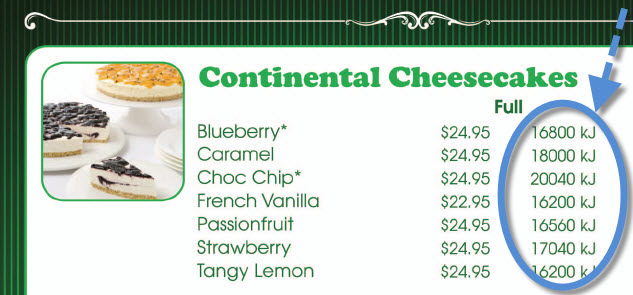
The cheesecakes shown above give you the kilojoule counts for the whole cake. You'd have to divide that figure by 8 or 10 depending on the number of serves you cut. These counts must be on their website and also on order forms.
How much food does 8,700 represent?
1. The ‘average’ daily diet
Here’s how a typical food day could look like to add up to around 8,700 *.
| Meal | Kilojoules |
|---|---|
| Breakfast (17% of the total day’s food) | |
| 2 Weet-Bix | 480 |
| Reduced fat milk, about 1 cup | 535 |
| Honey, 1 tablespoon | 95 |
| Banana | 335 |
| Morning Tea (17%) | |
| Choc chip muffin | 925 |
| Cappuccino made with regular milk | 465 |
| Sugar, 1 teaspoon | 65 |
| Lunch (20%) | |
| Toasted cheese and tomato sandwich | 980 |
| Tub of strawberry yoghurt, reduced fat | 760 |
| Afternoon Tea (6%) | |
| Muesli Bar | 325 |
| Apple | 300 |
| Dinner (40%) | |
| Spaghetti with bolognaise meat sauce topped with grated cheese | 2,355 |
| 1 glass red wine | 290 |
| 2 TimTams | 790 |
| TOTAL | 8,700 |
* Figures have been rounded to the nearest 0 or 5 for ease of reading. Figures calculated using Foodworks 6.0.
2. A fast food way to reach 8,700
If you eat a lot of fast food, it won’t take you long to reach 8,700 kilojoules, Check out this day’s meal intake below and you’ll see that only six fast food items take you to your 8,700.
| Meal | Kilojoules |
|---|---|
| Breakfast (0%) | |
| None | 0 |
| Late morning (40%) | |
| Gloria Jean’s Large White Chocolate Mocha | 1,870 |
| Banana bread, toasted (Gloria Jean’s) with butter | 1,615 |
| Lunch (20%) | |
| McDonald’s Cheeseburger | 1,190 |
| Coca-Cola 375mL can | 675 |
| Dinner (40%) | |
| Super Supreme Pizza, thin crust | 2,350 |
| Mars bar, 53g | 1,050 |
| TOTAL | 8,750 |
Take note: Lunch doesn’t even include the ubiquitous “fries with that”!
Where does the figure of 8,700 come from?
It comes from national surveys of what Australians supposedly eat. According to Food Standards, we eat, on average, around 8,700 kilojoules a day.
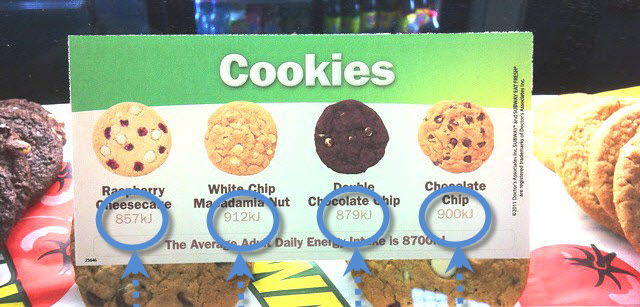
This figure of 8,700 MUST be stated somewhere on fast food menu boards. See the cookie example above from Subway. See how each cookie has its kilojoule count displayed PLUS there's the average adult intake of 8,700 along the base.
What percentage? Divide the kilojoules by 8,700 and compare
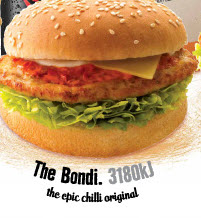
Yes, it's epic all right! This Bondi Burger gives you 35% of your day's suggested total. Divide 3,180 by 8,700 and you get 35%. Ask yourself - do I want to eat 35 per cent of my total intake in one item?
Related information
- The 8,700 website of the NSW Government outlines the new laws requiring fast food operators to display the kilojoule counts on their menus.
You may also be interested in...


About the Author
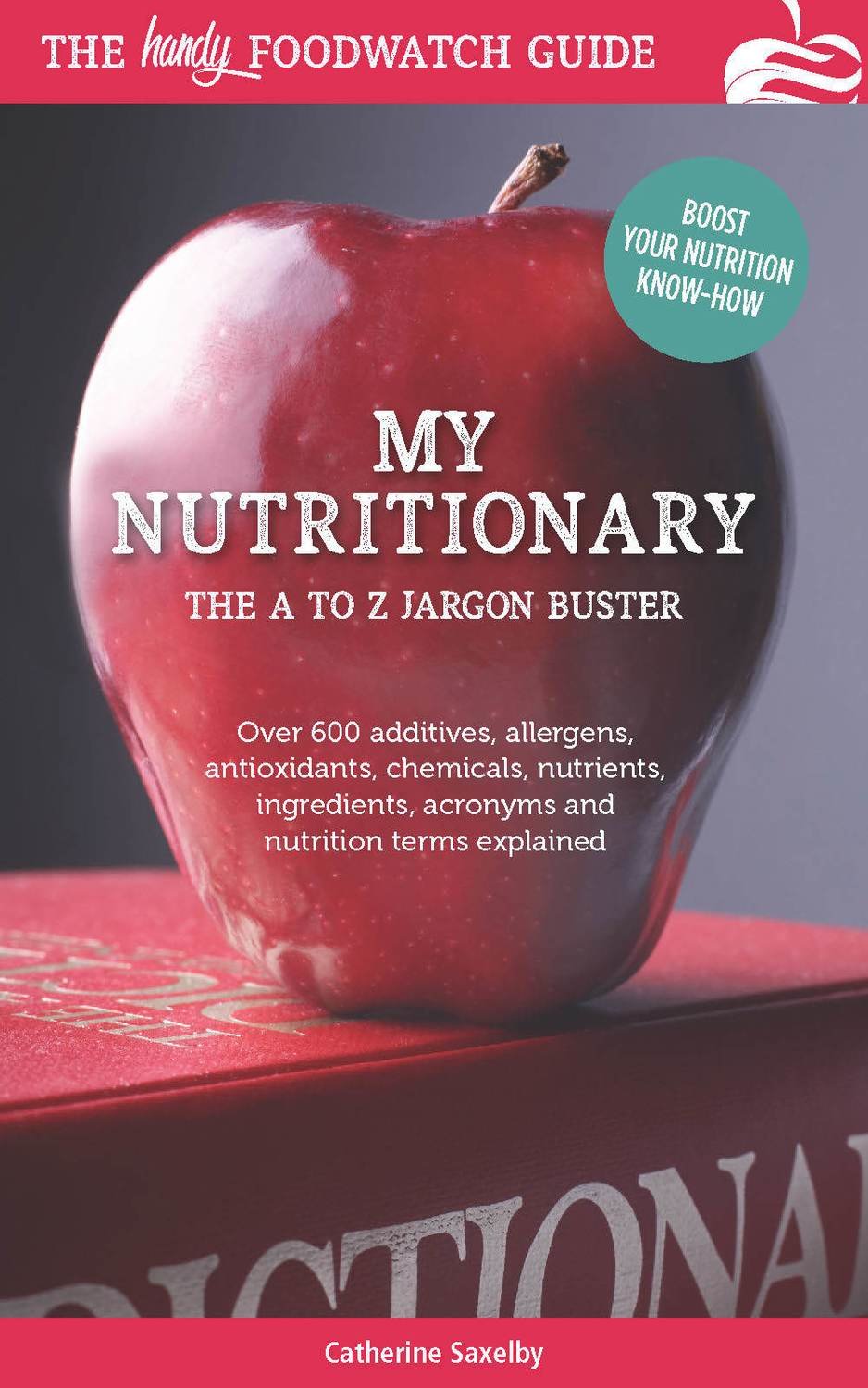
Catherine Saxelby has the answers! She is an accredited nutritionist, blogger and award-winning author. Her award-winning book My Nutritionary will help you cut through the jargon. Do you know your MCTs from your LCTs? How about sterols from stanols? What’s the difference between glucose and dextrose? Or probiotics and prebiotics? What additive is number 330? How safe is acesulfame K? If you find yourself confused by food labels, grab your copy of Catherine Saxelby’s comprehensive guide My Nutritionary NOW!