Home
Home About
About Reviews
 Recipes
 Books
Books Freebies
 Contact
 Search
Product review: LowGICane sugar

Sugar. We all love its soft sweetness but it's clear we overdo its consumption. As a nation, Australia has a collective sweet tooth that sees us consuming ¾ of a kilo a week of the stuff. From soft drinks to ice cream, doughnuts to dessert, sugar is everywhere. While it's not the cause, it's certainly contributing to health problems such as tooth decay, and being overweight.
We're urged to moderate our sugar intake which for many of us translates to halving the added sugar we now ingest. Fewer soft drinks, confectioneries, cakes, doughnuts, biscuits, sweetened cereals and ice-creams would be better for our health (and our waistlines).
Sugar is a low nutrient food. It's more refined than any other food, with every small bit of mineral or plant compound processed out of it during the milling process. Botanically, sugar cane is a grass with a naturally high sugar content. At 99.7% pure sucrose, it adds nothing to your nutrition intake except sucrose - no vitamins, no minerals, no antioxidants. A nutritionist once dubbed it ‘pure, white and deadly' for just this reason.
If you use it to sweeten basic healthy fare like milk, yoghurt, breakfast oats and the occasional home-baked muffin, it enhances the flavour of plain food and is less of a problem. But when it's gulped down in the form of fizzy drinks, fruit juice drinks and caramel frappe lattes, it's a pest, thanks to the ease with which we can consume it.
Tasting my first pack of LoGIcane
It was with some curiosity that I sampled my first pack of the new low GI cane sugar called LoGICane.
The pitch I received from the LoGIcane people had babbled on about "the world's first all-natural low glycemic index cane sugar" and "the healthier alternative to white sugar" and other remarkable breakthroughs.
Manufactured by sugar giant CSR and marketed under the LoGiCane (http://www.logicane.com/) logo, this new "healthier" sugar has taken over four years of hard development work and serious funding - $5.4 million in grants from the Australian and Queensland governments.
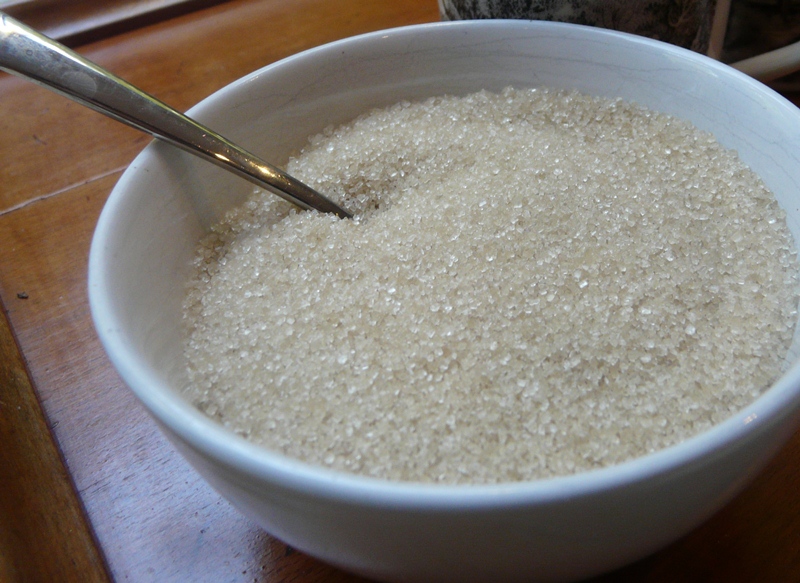
My first impression was that it looks just like raw sugar - pale golden squarish crystals of sugar that many of us spoon into our morning coffee. Couldn't see anything that special.
Here's how they make it
During the milling of sugar cane to make white sugar, all the ‘goodness' from the cane is stripped out and discarded as waste. This waste is in fact full of fibre and valuable plant chemicals called phytochemicals such as antioxidants e.g. polyphenols like the catechins in tea.
Rather than discard it, the sugar processors found a way to extract these polyphenols along with some organic acids and minerals from the molasses waste. Researchers had realised that this waste with its polyphenols did three interesting things. It:
- boosted the level of minerals and natural plant material in the final sugar
- added a little colour which made the final sugar look a little less ‘refined' so ‘better-for-you' than ordinary sugar
- could lower the GI of the sugar. How? Each sugar crystal has a layer of polyphenols surrounding it so it makes the sugar more resistant to digestion. It's harder for our digestive enzymes to get at and break down the sucrose ‘inside'.
So they reincorporated this high-polyphenol mix back into washed raw sugar crystals in just the right amount to make a difference.
The short summary: the sugar cane polyphenols are extracted and then sprayed over ordinary raw sugar to create the LoGICane sugar.
My thoughts:
This is clever technology and utilises something that before would be been discarded as waste. But it's not going to save us from our excessive overconsumption of sugar. Here's why:

1. It's not THAT low in GI. It has a GI of 50 (give or take 5 points either way, according to their figures) so sits at the top of the ‘Low GI' category which has a cut-off of 55 or less. It's definitely lower than ordinary sugar which has a GI of 65 (+ or - 4) and which is classified as medium but it's not as low as lentils (26) or oranges (45+ or - 4), for example.
2. There are not that many uses for it. It looks and functions like raw sugar and I soon realised it can't be substituted for all forms of sugar. For instance, it's no good for making the lemon icing that goes over my favourite carrot cake (I need icing sugar for that). Nor could it make a light sponge (white sugar) or bake Anzac cookies (brown sugar). On the other hand, it's great to sweeten your tea and coffee, makes great sugar syrups for poached fruit and certain types of cakes. Anywhere that you'd cook with raw sugar, you can use LoGICane.
3. It's expensive which is understandable given the huge investment in technology and the complicated process to manufacture it.
At my supermarket, a 750g bag retails for $2.79 (which is equivalent to $3.72 per kilo). In contrast, a 500g bag of ordinary raw sugar sells for only 99 cents (equivalent to $2 a kilo). So you'll pay more for it but perhaps this will limit how much you use which is good. Or, it may put you off which will defeat the purpose.
The bottom line
LoGICane sugar is a clever invention using Australian technology. But it won't solve the problem of too much sugar consumption as 75 per cent of our total intake comes from manufactured foods (soft drinks, juices, baked good) and they don't use LoGIcane.
Even if we swapped ALL our sugar at home over, it would only affect the other 25 per cent of our intake - and we need more! However the same could be said for any other sugar substitute e.g. stevia or aspartame. Home use isn't enough to make a difference and that's the drawback.
Downloads / Fact Sheets
Download my handy pdf Fact Sheet on sugar (470 KB) - where it's hiding, how much is in the everyday foods we love to eat, how much is OK to have, and 4 easy ways to cut back on it.
You may also be interested in...


Like to have your product reviewed by Catherine?
 This post was researched and written by Catherine Saxelby, an accredited nutritionist, dietitian, author and award-winning food communicator. Catherine's goal is to help busy working women eat well, maintain a healthy weight and boost their energy.
Checkout Catherine’s other posts, books and product reviews or sign up for her free Foodwatch newsletter. To have your product or service reviewed by Catherine and her team, click here.
Sign up for Catherine's free Foodwatch newsletter

About the Author
Catherine Saxelby has the answers! She is an accredited nutritionist, blogger and award-winning author. Her award-winning book My Nutritionary will help you cut through the jargon. Do you know your MCTs from your LCTs? How about sterols from stanols? What’s the difference between glucose and dextrose? Or probiotics and prebiotics? What additive is number 330? How safe is acesulfame K? If you find yourself confused by food labels, grab your copy of Catherine Saxelby’s comprehensive guide My Nutritionary NOW!